
Hey, South Africans. You’re part of the industry in one way or another, a contractor, developer, or just working on your next project. You’ve noticed what’s happening. The load shedding might not be happening as much, but the green revolution in the industry is taking off very rapidly. One prediction that has now surfaced through Global Data is that the industry will bounce back with an average annual growth rate of 3.5% from 2026 onwards. And behind it all? Steel, not only propping up everything, but also driving the charge towards a green revolution.
The evidence mounts every year about the use of steel being the material of choice. The truth is that steel is robust, it is flexible, and it shines as the ideal material for the circular economy that we’re all moving towards.
The Push for Sustainability in SA Building
Sustainability has not only become a priority but a requirement. This has become the norm. Large cities like Cape Town, Joburg, Tshwane, and Durban are encouraging net-zero carbon emission buildings by the year 2030. The use of Energy Performance Certificates has also become mandatory for some buildings. The national standard, SANS 10400-XA, helps us reduce the energy intensity of the constructions we make by providing us with the minimum requirements that new constructions must attain.
An increasing number of projects are being certified every year by the Green Building Council of South Africa through their Net Zero Options, which are, in fact, highly sought after. Steel is in line with such ideals globally, including in our own country, within the circular economies and against our stringent regulations.
Steel’s Superpower: Infinite Recycle
This is, however, the case with steel, which could be recycled repeatedly with no reduction in strength. This, according to the World Steel Association, makes steel the most recycled material found on earth. Locally, it is the Metal Recyclers Association that has helped recycle over 80% of our scraps. This keeps the loop closed.
Recycling steel requires a tenth of the same amount of energy that steel requires to smelt steel from iron ore. You are automatically casting a vote for a product which has its complete life cycle reborn after you have used it and will not be found in a landfill.
Built to Last: Long-Lasting Quality that Saves You Money in the Long Run
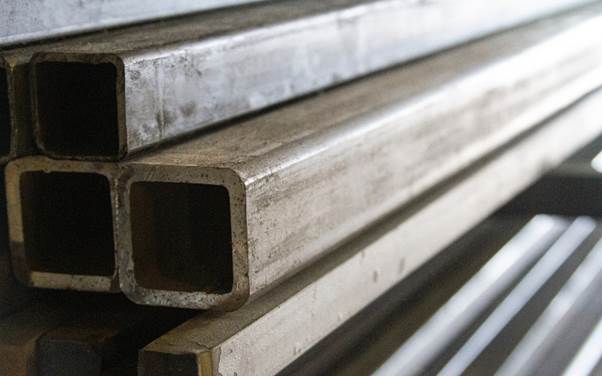
Steel is a robust material. Steel can withstand corrosion, even in our aggressive local climate, when the required protective coatings are applied. Steel faces no issues when dealing with salt found by the coast or the harsh local weather of the Highveld region. Steel, even in a normal climate, will serve for over 50 years if maintained well, claims the World Steel Association.
That is an improvement over other alternatives that would need repairs earlier. It saves on the high maintenance costs that would be experienced in the future. There would also be fewer replacements. The other advantage is that prefabricated steel doesn’t generate construction waste at the construction site because the steel is measured specifically so that it fits perfectly.
Methods of Helping the Planet
The circular economy is a matter of getting as many uses out of materials as possible. Steel is very adept at this. According to the World Steel Association, high-strength steel can cut CO2 emissions by as much as 30% in columns, because you need less material.
In the case of SA, where resources are limited and cost issues are on the rise, common sense would prevail regarding this matter. The use of slender steel frames and the production of quality steel tanks would not only symbolise less waste incurred during the production of such elements, but it would be of profound inherent value during the demolition phase, channelled directly back into the production cycle for reuse.
Why 2026 is Steel’s Year
From 2026 onwards, the factor that would catalyse the expansion would be public spending in the renewable and industrial sectors. Materials with a low carbon footprint, which can be recycled effortlessly, would fall in the winning category due to the looming shift in the Carbon Tax.
Steel is available. By choosing steel in the current scenario, your solution will remain pertinent even in the scenario of more stringent carbon footprint regulations.
Actual Benefits to SA Projects
To fully grasp how ranging from storage facilities, agricultural land, residential areas, to water tanks, steel has passed the test in every way because.
- Rapid development because of prefabricated alternatives.
- Easy future changes.
- High fire resistance and security.
- Green Edge customers are now demanding.
Some local developments where steel has reduced the cost and negative environmental effects without necessarily compromising on standards. As noted by the U.S. Commercial Service, “The outlook for ‘green’ buildings in SA is growing fast, and steel is at the forefront of it all.” However, always at the fore is the Department of Forestry, Fisheries, and Environment, encouraging greener environments in South Africa.
Conclusion:
To get beyond braai talk, the way forward in 2026 and beyond is indeed to choose steel. One of the many great attributes that this metal has is that it has several incredibly positive characteristics, which are perfect for our time now, when we are on a sustainability journey.
I am one member of the industry in South Africa who is really looking forward to this, as steel is helping to build a strong and take loving care of our beloved country. If you are designing steel structures or steel tanks that are not only strong but environmentally sound, then check the work that JJ Groups has accomplished for steel fabrication solutions. Are you ready to make your next project one that truly wins on the planet and in your pocket?
Then contact JJ Groups today for a free quote on durable and environmentally sound steel structures and steel tanks. Click on the link below right now and get started on your steel structures. https://jjgroups.co.za/
Add a Comment