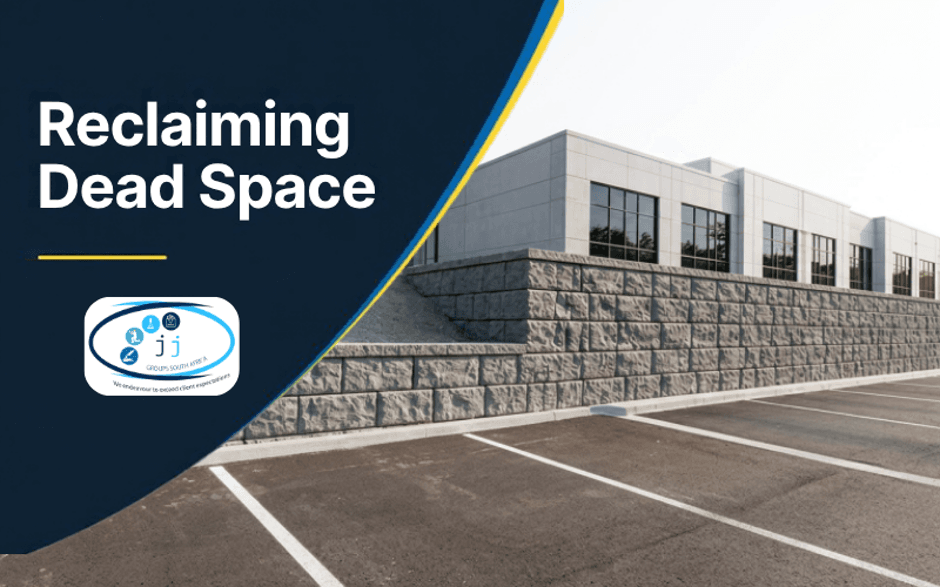
Reclaiming Dead Space
If you run a business in South Africa, you know property does not come cheap. Land is seriously expensive. Whether your commercial site is tucked away in a busy Durban industrial park or sprawling across a Gauteng logistics hub, every single square meter directly impacts your bottom line. Take a walk around your boundary line today. Chances are, you will spot a steep, overgrown bank of dirt taking up valuable room. We call that dead space. It just sits there, collecting weeds, catching blown litter, and washing mud onto your pristine driveway when the hectic summer rains hit.
It is incredibly frustrating to watch your delivery bakkies and heavy trucks struggle for turning circles while a massive chunk of your property is literally just a hill. Most site managers simply write this off as a permanent headache. They hire a maintenance crew to cut the grass and chop back the bush twice a year and just leave it at that. But if you look at it through the lens of business growth, that slope is actually a massive opportunity waiting to happen. You can make a plan, flatten it out, and put that ground to work.
When you decide to cut into a slope and install proper structural support, you are literally manufacturing land. This completely shifts civil work from a frustrating maintenance cost to a direct property value investment. You stop paying municipal rates on a useless hill and start using that space to actively grow your daily operations.
How Engineered Retaining Walls Maximise Commercial Property Value
This is the part where things get genuinely interesting from a financial perspective. Let us talk about How Engineered Retaining Walls Maximize Commercial Property Value. When you reclaim dead space, you instantly add usable square meterage to your operational footprint. In the commercial real estate world, space equals money. It is as simple as that.
You can check out property and business platforms like Property Wheel to see exactly how much industrial land goes for per square meter these days. Buying the empty stand next door to expand your yard will cost an absolute fortune. That is assuming there is even a vacant plot available in your precinct. Paying a reputable civil contractor to push back your boundary and hold it safely in place is often a fraction of the cost of acquiring a new property. It is a highly logical, long-term capital investment that boosts your balance sheet the day the concrete cures.
Creating Room for the Heavy Stuff
Once the ground is finally level and paved, the options for your business open up fast. Companies usually need this reclaimed space for three major operational upgrades.
First up is fleet parking. Logistics, courier, and transport companies are always fighting for yard space. Getting those heavy trucks and delivery vans parked safely against the boundary frees up your main loading zones. No more frustrating bottlenecks at the main gate while drivers wait for a bay to open up. You can read up on how yard congestion directly affects supply chain turnaround times on business hubs like BizCommunity.
Second is equipment storage. If you run a manufacturing or construction business, you likely have bulky gear that can easily survive the weather. Putting heavy equipment, scaffolding, or raw materials outside on a new concrete hardstand means you can reserve your highly expensive indoor warehouse space for sensitive, high-value stock.
Third is actual physical expansion. Sometimes your business is booming, and you just need to build a brand new warehouse wing. Pushing the earth back to the boundary line gives you the flat foundation footprint required to extend your current building legally and safely, without needing to move your entire operation to a new suburb.
The Nuts and Bolts of Bulk Earthworks
You cannot just hire a guy with a rented TLB and hope for the best. Getting this right requires serious, professionally managed bulk earthworks. You need to excavate the precise amount of soil without destabilising the rest of the site or risking a collapse onto your neighbour’s property.
This process means proper site clearance, precise levelling, and heavy compaction of the subgrade. If a contractor cuts corners here, your brand new parking lot is going to sink and crack the very first time a fully loaded eighteen-wheeler drives over it. The heavy lifting has to be managed properly from day one. Industry publications like Engineering News frequently publish case studies showing exactly why proper foundational groundwork is entirely non-negotiable for commercial infrastructure projects.
Why Structural Concrete is Non-Negotiable
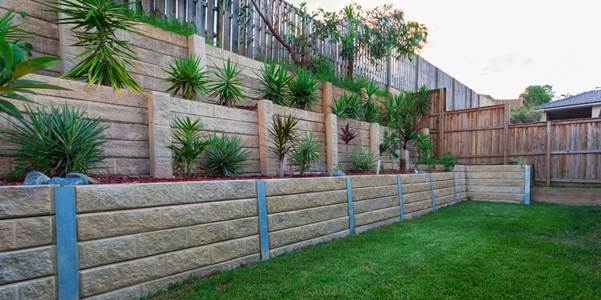
Now for the actual wall itself. Holding back tonnes of dense South African soil takes way more than a few hollow blocks stacked together with some cheap mortar. You need a structurally engineered, fully compliant retaining wall.
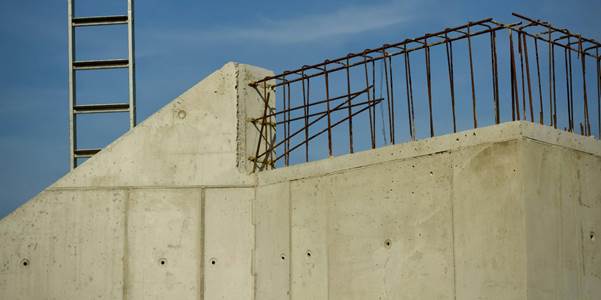
We are talking about heavy-duty structural concrete here. Whether it is a cast-in-place system poured on site or an engineered precast setup, the materials simply have to handle immense lateral pressure. When KZN or the Highveld gets those notoriously hectic summer downpours, groundwater builds up rapidly behind the wall. If the concrete is weak, or if the subsoil drainage is poor, that wall is coming down.
This is exactly why engineering compliance is so crucial. Your new wall must meet strict safety and building regulations. Professional bodies like the South African Institution of Civil Engineering (SAICE) set the gold standard benchmark for structural integrity in our local civil sector. The concrete mix itself must also adhere to the strict durability standards outlined by Cement and Concrete SA to ensure it survives decades of aggressive outdoor exposure without spalling or failing.
Moving from a Monthly Headache to a Permanent Asset
Think about the actual money you spend maintaining that useless slope right now. You are paying for clearing storm drains blocked by mud, fixing perimeter fences that sag as the earth naturally moves, and dealing with constant soil erosion. That cash just disappears into your monthly operating expenses with zero return on investment.
Putting capital into a proper civil solution flips the script completely. You get a permanent asset instead of a recurring bill. A structurally sound, fully engineered retaining wall fixes the site drainage problems, secures the boundary line, and hands you a massive slab of usable land. It is the kind of smart, strategic move that pays for itself over the years through increased operational efficiency and a higher overall property valuation.
Partnering with the Right Civil Construction Experts
This level of site transformation requires a contractor who knows exactly what they are doing. You need a team with proven bulk earthworks and structural concrete capabilities. They must understand local soil conditions, groundwater management, and most importantly, how to keep a busy commercial site running smoothly while the heavy machinery does its job.
This is where JJ Groups really steps up to the plate. Our team does not just move dirt around and pour concrete. We handle the complex engineering, the rigorous compliance, and the tough civil work so you can stay entirely focused on running your business. We know how to transform your dead space safely and efficiently. If you want to see exactly how we tackle these major site upgrades, take a look at our dedicated civil and construction services page.
Unlock Your Property Potential Today
Stop paying commercial rates on unusable land. Reclaiming your boundary is the smartest way to generate space without the massive cost of relocating your business. If you are ready to turn that frustrating slope into a profitable, highly functional asset for your daily operations, JJ Groups has the heavy machinery and the engineering expertise to make it happen. Reach out to our expert team today to discuss your site challenges and request a detailed quote. Visit the JJ Groups Contact Page right now to get the ball rolling.