Potholes, Payloads, and Profits
Running a transport business in South Africa is not for the faint of heart. You know the drill. We have a lekker country with some of the most beautiful scenery in the world, but the moment you leave the main national highways, things get real very quickly. You are out there trying to run a profitable fleet, but you are constantly fighting against an infrastructure system that seems determined to break your equipment.
We are talking about a hard-hitting, realistic take on local transport. If you are in the logistics game here, you understand that your profit margins are directly tied to how well your equipment can handle the environment. The title of this piece really says it all. Potholes, payloads, and profits are the three things that keep every local fleet manager awake at night. If you cannot manage the first two, you can completely forget about the third.
The Illusion of Imported Equipment
Let us be honest for a second. We have all seen those beautifully designed, off-the-shelf imported trailers. They look absolutely fantastic sitting on a showroom floor. They come with glossy brochures and promise you the world. But there is a massive problem. Those trailers were engineered for smooth European highways or perfectly paved expressways overseas.
When you take one of those standard imported units and put it on a rural road in KwaZulu-Natal or a deteriorating industrial route in Gauteng, the story changes fast. The reality is that off-the-shelf imported trailers often crack or suffer structural failure when subjected to the realities of South African road networks and heavy loads. You hit one gaping pothole, and suddenly you have a bent chassis or a collapsed suspension.
According to recent reports on local road conditions, many regional routes are so full of potholes that they disrupt economic activity and severely damage commercial vehicles. You cannot expect a standard, lightweight imported frame to survive this kind of daily punishment. It is just not going to happen.
The True Cost of Repair Shop Delays
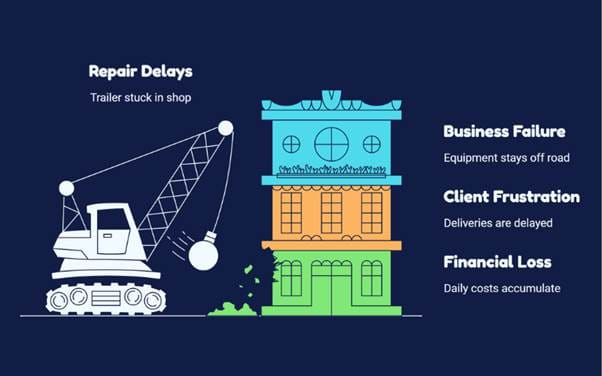
So, what happens when that imported trailer fails? It goes straight to the repair shop. And in the trucking industry, a stationary vehicle is essentially a financial black hole.
Every single day your trailer spends waiting for parts or getting welded back together, you are losing serious money. You still have to pay your drivers, cover your insurance, and manage your fixed depot costs. On top of that, your clients are getting frustrated because their deliveries are delayed. Eish, it is a total nightmare.
Industry experts note that the daily cost of fleet downtime can easily range from eight thousand to over fourteen thousand Rand per vehicle. When you factor in the extra costs of imported replacement parts and long towing distances in South Africa, that number climbs even higher. Spending weeks in the repair shop because your trailer could not handle a local road is a surefire way to kill your business. You need equipment that stays on the road and out of the workshop.
Heavy Duty Steel Fabrication is the Answer
This is exactly where local engineering steps in to save the day. You cannot compromise on structural integrity when you are dealing with local routes. You need proper, heavy-duty steel fabrication.
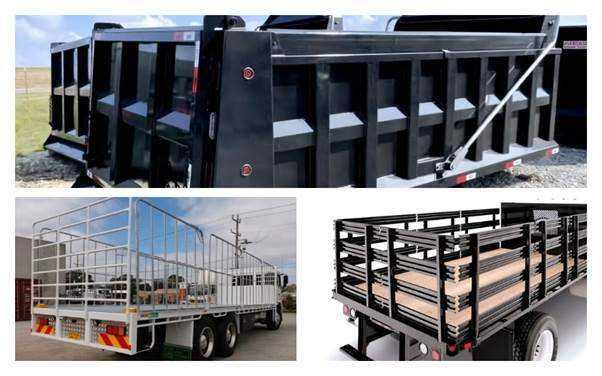
Companies that understand our local conditions do not just build trailers. They build localised, reinforced steel frames designed to handle maximum payloads and brutal road conditions without breaking a sweat. This requires an in-depth understanding of metallurgy and construction. For instance, builders who follow the strict structural guidelines set by the Southern African Institute of Steel Construction ensure that the materials used are up to the extreme demands of our transport sector.
By focusing on high-quality steel fabrication, local manufacturers create a product that is fundamentally different from a mass-produced import. They reinforce the high stress points. They use thicker, more resilient steel where it matters most. They know that a trailer here is going to take a beating, so they design it to fight back.
Managing Maximum Payloads Legally and Safely
Let us talk about the payloads. To make a profit in the South African freight industry, you need to move as much cargo as legally possible on every single trip. You want to maximise your Gross Combination Mass without overloading your axles.
Understanding South African road freight load regulations and payload capacities is critical. The law allows for heavy loads, but carrying those loads puts immense pressure on your trailer framework. If your trailer is weak, loading it to the maximum legal limit will eventually cause it to snap under the weight.
When you invest in locally manufactured, reinforced steel truck bodies, you get total peace of mind. You know that your equipment can handle the heavy stuff. You are not holding your breath every time your driver pulls off at a robot or navigates a poorly maintained secondary road. You are simply getting the job done safely.
Connecting with organisations like The Road Freight Association can help you stay updated on industry standards, but at the end of the day, the physical strength of your fleet is entirely in your hands. You have to choose the right equipment from the start.
Building Trailers Tough Enough for South African Routes
This brings us to the core philosophy that every local transport operator needs to adopt. You have to prioritise equipment built for our specific environment. The phrase Building Trailers Tough Enough for South African Routes is not just a clever marketing line. It is a survival strategy for your business.
When you use equipment designed for the exact potholes and payloads your drivers face every day, your profit margins stop shrinking and start growing. You eliminate those unexpected breakdown costs. You keep your clients happy with reliable deliveries. You sleep a little bit better at night knowing your fleet is robust, reliable, and ready for whatever the road throws at it.
If you are tired of dealing with cracked chassis and endless downtime, it is time to rethink your fleet strategy. Stop settling for equipment that cannot handle the pressure. Choose strength, choose local expertise, and watch your profits stabilise.
Your Partner in Local Transport Solutions
Securing your profits means partnering with a manufacturer who truly understands the harsh realities of local transport. JJ Group provides the heavy-duty steel fabrication and customised trailer manufacturing services discussed throughout this blog. We do not do flimsy or fragile. We focus on delivering localised, reinforced steel structures that keep your business moving forward.
Whether you are looking to upgrade your fleet or need a custom solution built to handle extreme conditions, our comprehensive range of truck bodies, frames, and trailers is engineered specifically for maximum durability. Stop letting poor road conditions dictate your bottom line. Reach out to JJ Group today to request a quote, and let us help you build a fleet that actually lasts.